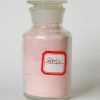
4-fluorococaine For Sale
Chemical Formula
| Property | Information |
|---|---|
| Common name | 4-Fluorococaine / 4′-Fluorococaine |
| Systematic name | Methyl (1R,2R,3S,5S)-3-[(4-fluorobenzoyl)oxy]-8-methyl-8-azabicyclo[3.2.1]octane-2-carboxylate |
| Molecular formula (free base) | C₁₇H₂₀FNO₄ |
| Molecular weight | 321.34 g/mol |
| CAS number | 134507-62-3 |
| PubChem CID | 126112 |
| Formula of hydrochloride reference material | C₁₇H₂₀FNO₄·HCl |
| Molecular weight of HCl salt | 357.8 g/mol |
The compound is a fluorinated tropane ester structurally related to cocaine, with a para-fluoro substituent on the benzoyl ring.
2. Chemical Composition
The elemental composition of the free base is:
- Carbon (C): 17 atoms
- Hydrogen (H): 20 atoms
- Fluorine (F): 1 atom
- Nitrogen (N): 1 atom
- Oxygen (O): 4 atoms
Its molecular architecture includes:
- A tropane ring system
- A tertiary amine
- A methyl ester
- A 4-fluorobenzoyl ester group
This structure makes it a member of the broader cocaine/tropane analogue chemical family.
3. Storage and Handling
For certified reference materials, handling should follow the supplier’s certificate and institutional controlled-substance procedures.
General laboratory practices include:
- Storage in a secure, access-controlled chemical cabinet or controlled-substance storage area
- Use of the original, tightly sealed container
- Protection from unnecessary heat, moisture, and light
- Maintenance of a documented inventory and chain of custody
- Use of appropriate PPE and engineering controls
- Avoidance of uncontrolled exposure or contamination
Certified reference materials should be handled according to their specific certificate and supplier recommendations. The Australian National Measurement Institute lists 4-fluorococaine hydrochloride as a forensic drug reference material.
4. Chemical and Physicochemical Properties
Published/computed properties include:
- Molecular weight: 321.34 g/mol
- Exact mass: 321.137636 Da
- XLogP3: 2.4
- Hydrogen-bond donors: 0
- Hydrogen-bond acceptors: 6
- Rotatable bonds: 5
- Topological polar surface area: 55.8 Ų
The presence of a tertiary amine also means its physical and chromatographic behavior can depend on the acid/base environment and whether it is present as a free base or salt.
5. Research Uses
Potential legitimate research applications include:
A. Structure–Activity Relationship Research
4-Fluorococaine can be used to investigate how fluorine substitution affects the pharmacology and physicochemical behavior of cocaine analogues.
B. Neuropharmacology
Published research has examined fluorinated cocaine analogues in studies involving monoamine transporter interactions, including dopamine and serotonin transport systems.
C. Molecular Imaging Research
Fluorinated analogues have been investigated as part of radiotracer research, including PET-related work involving fluorine-labelled cocaine analogues.
D. Metabolism and Toxicology Research
The compound can serve as an analytical target for studies of:
- Biotransformation
- Metabolite identification
- Analytical toxicology
- Structure-based pharmacological comparisons
6. Analytical & Forensic Applications
4-Fluorococaine is particularly relevant to forensic and analytical laboratories.
Common analytical approaches may include:
- GC-MS
- LC-MS/MS
- High-resolution mass spectrometry
- FTIR spectroscopy
- NMR spectroscopy
- Chromatographic comparison against certified reference materials
Potential forensic uses include:
- Identification of unknown seized materials
- Differentiation from cocaine and other tropane analogues
- Validation of toxicology methods
- Development of reference libraries
- Quality-control and method-validation studies
The Australian National Measurement Institute specifically lists p-fluorococaine hydrochloride among its forensic drug reference materials, supporting its relevance to analytical and forensic science.
7. Positive Scientific Uses
Scientifically, the most defensible positive uses are:
- Development of forensic analytical standards
- Validation of mass-spectrometric detection methods
- Cocaine analogue structure–activity research
- Neuropharmacological research
- Metabolism and toxicology studies
- Reference-library development
- Research into illicit-drug detection technologies
- Training of forensic and analytical laboratories
Its value is primarily as a research and reference compound, rather than as a therapeutic medicine.
8. Licensed Institutional Handling & Distribution
Institutional handling should generally be limited to organizations such as:
- Universities with appropriate laboratory authorization
- Licensed forensic laboratories
- Government laboratories
- Accredited analytical testing facilities
- Authorized pharmaceutical or toxicology research institutions
Good institutional controls typically include:
- Appropriate controlled-substance authorization where required
- Restricted personnel access
- Written inventory procedures
- Chain-of-custody documentation
- Secure storage
- Trained and authorized personnel
- Approved waste-disposal procedures
- Procurement through legitimate, authorized channels
A reputable route for analytical work is acquisition as a certified reference material, rather than treating the compound as an ordinary commercial research chemical.
9. Legal Status & Regulatory Controls
The legal status of 4-fluorococaine is jurisdiction-specific and may change.
Because it is structurally related to cocaine, it may be:
- Explicitly scheduled
- Controlled as a cocaine analogue
- Covered by analogue legislation
- Restricted under broader psychoactive-substance legislation
- Subject to import/export controls
For example, sources commonly describe it as controlled in the United States and subject to the UK Psychoactive Substances Act framework. However, researchers should not rely solely on general online summaries and should verify the current status with the relevant national drug-control authority and institutional compliance office before procurement or research.
10. Frequently Asked Questions (FAQ)
Is 4-fluorococaine the same as cocaine?
No. It is a synthetic structural analogue of cocaine containing a fluorine substitution on the benzoyl ring.
What is its molecular formula?
C₁₇H₂₀FNO₄ for the free base.
What is the molecular weight?
321.34 g/mol for the free base.
What is the CAS number?
134507-62-3.
Is it useful for forensic science?
Yes. Its principal legitimate relevance is in forensic reference materials, analytical method development, identification, and toxicology research.
Can it be freely purchased as a normal laboratory chemical?
That depends on the jurisdiction. Because of its relationship to cocaine and potential psychoactive activity, procurement and possession may require licenses, permits, or institutional authorization.
What is the safest research approach?
Use legitimate institutional approval, acquire authenticated reference material through authorized channels, maintain secure custody, and follow applicable chemical safety and controlled-substance regulations.
Research note: Before adding this compound to a PhD project, verify the current legal classification in your country and the country of your institution, because scheduling and analogue-control rules can change.
| Quantity | 20 Grams, 50 Grams, 100 Grams, 250 Grams |
|---|
Related products
Stimulants
Phamaceutical Research
Phamaceutical Research
Phamaceutical Research
Research Chemicals
Research Chemicals
Phamaceutical Research
Phamaceutical Research