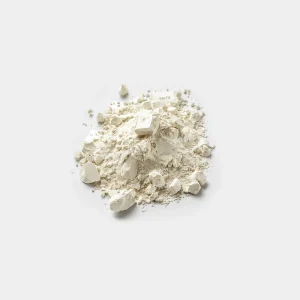
4-AcO-MET Fumarate for sale
$210.00
4-AcO-MET Fumarate for sale – Overview, Uses & Regulatory Information
4-AcO-MET (4-acetoxy-N-methyl-N-ethyltryptamine) fumaraat is een onderzoekschemicalie behorend tot de tryptamineklasse, structureel verwant aan psilocine (4-HO-DMT) en 4-AcO-DMT. Deze verbinding wordt in wetenschappelijke kringen bestudeerd vanwege zijn unieke interactie met serotoninerceptoren.
4-AcO-MET Fumarate For Sale
Chemical Formula
- Common name: 4-AcO-MET fumarate
- Chemical name: 4-Acetoxy-N-methyl-N-ethyltryptamine fumarate
- IUPAC name: (E)-but-2-enedioic acid;[3-[2-[ethyl(methyl)amino]ethyl]-1H-indol-4-yl] acetate
- Molecular formula: C₁₉H₂₄N₂O₆
- Molecular weight: 376.40 g/mol
- CAS number: 2711006-96-9
- PubChem CID: 92135116
- Freebase parent compound: 4-AcO-MET, C₁₅H₂₀N₂O₂, molecular weight 260.33 g/mol
The fumarate material consists of the 4-AcO-MET component associated with fumaric acid. Structural literature specifically describes the solid as a 4-AcO-MET hydrofumarate salt, containing a protonated tryptamine cation and hydrofumarate anion.
Chemical Composition
4-AcO-MET fumarate for sale contains:
| Element | Count |
|---|---|
| Carbon (C) | 19 |
| Hydrogen (H) | 24 |
| Nitrogen (N) | 2 |
| Oxygen (O) | 6 |
The structure contains:
- An indole ring system
- A tryptamine backbone
- An N-ethyl-N-methyl amino group
- A 4-acetoxy substituent
- A fumarate counterion
The formula weight reported for the fumarate is 376.4 g/mol, while the exact mass is reported as approximately 376.1634 Da.
Storage and General Properties
General physical properties
4-AcO-MET fumarate is a synthetic tryptamine-class compound generally encountered as a laboratory chemical or analytical reference material. The freebase parent is chemically classified as 4-acetoxyethylmethyltryptamine.
Recommended research storage approach
For licensed laboratory handling:
- Store in a tightly sealed, clearly labeled container.
- Keep dry and protected from unnecessary moisture.
- Protect from prolonged light exposure.
- Avoid unnecessary heat and repeated temperature cycling.
- Follow the supplier’s certificate of analysis, SDS, and institution-specific storage instructions where available.
- For long-term research storage, use controlled conditions appropriate to the compound’s documented stability.
Because ester-containing tryptamine derivatives may be susceptible to chemical transformation under unsuitable conditions, analytical laboratories should establish stability based on validated studies rather than assuming indefinite stability.
Research Uses
4-AcO-MET is primarily relevant as a research chemical and new psychoactive substance (NPS).
Potential legitimate research areas include:
- Structure–activity relationship research involving substituted tryptamines.
- Serotonergic receptor pharmacology, subject to appropriate experimental approvals.
- Investigation of psychoactive tryptamine analogues.
- Metabolism and biotransformation studies.
- Analytical method development.
- Toxicological screening research.
- Reference-standard development and validation.
Current forensic NPS monitoring also considers 4-acetoxy MET sufficiently relevant that it was added to the Q2 2026 U.S. recommended scope for NPS testing associated with the CFSRE/SOFT NPS recommendations.
Analytical & Forensic Applications
4-AcO-MET fumarate may be useful as a reference material for:
Analytical identification
- LC-MS/MS
- High-resolution mass spectrometry
- GC-MS, where method suitability and thermal behavior are validated
- NMR spectroscopy
- FTIR/ATR-IR spectroscopy
Public compound records contain ¹³C NMR and ATR-IR spectral information, which can support identity confirmation and reference-library comparison.
Forensic applications
Research applications may include:
- Identification of unknown NPS samples.
- Development and validation of toxicology screening methods.
- Expansion of mass-spectral libraries.
- Seizure and sample characterization.
- Differentiation from structurally related tryptamines.
- Research into degradation products and metabolites.
Because emerging psychoactive substances can be missed by routine drug panels, validated reference materials are important for improving laboratory detection capability. The 2026 NPS testing-scope recommendation provides evidence of current forensic relevance.
Positive Scientific Uses
Potential positive scientific applications include:
- Advancing knowledge of serotonergic neuropharmacology.
- Supporting research into tryptamine structure–activity relationships.
- Improving forensic detection of emerging substances.
- Developing and validating analytical reference libraries.
- Supporting toxicology and public-health surveillance.
- Studying chemical stability, metabolism, and degradation pathways.
- Helping laboratories distinguish legitimate scientific samples from unknown or misidentified NPS materials.
These applications are best conducted under appropriate institutional oversight, analytical quality systems, and legal authorization.
Licensed Institutional Handling & Distribution
Handling should generally be limited to:
- Universities and recognized research institutions.
- Accredited analytical laboratories.
- Forensic and toxicology laboratories.
- Licensed chemical suppliers.
- Institutions operating under applicable controlled-substance, chemical-safety, and import/export regulations.
Good institutional controls may include:
- Verified procurement channels.
- Certificate-of-analysis and chain-of-custody documentation.
- Restricted laboratory access.
- Inventory and sample accountability.
- Appropriate PPE and exposure controls.
- Validated analytical procedures.
- Waste handling under institutional hazardous-chemical procedures.
Distribution or transfer should occur only where legally permitted and with appropriate documentation.
Legal Status & Regulatory Controls
The legal status of 4-AcO-MET varies significantly by jurisdiction. It may be:
- Explicitly controlled by name.
- Covered by an analogue or generic-definition provision.
- Regulated as a psychoactive or NPS substance.
- Subject to medicines, chemical, customs, or import restrictions.
- Lawful to possess for limited research while restricted for other purposes.
Therefore, research-chemical status does not mean unrestricted legal status.
Before procurement, possession, import, or distribution, researchers should check:
- National controlled-substances schedules.
- NPS or analogue legislation.
- University and institutional authorization requirements.
- Import/export restrictions.
- Local laboratory licensing and ethical requirements.
In the United States, the current forensic monitoring landscape is actively evolving; for example, 4-AcO-MET was added to the recommended U.S. NPS testing scope for Q2 2026. However, forensic scope recommendations are not themselves a substitute for a formal legal-status determination.
Frequently Asked Questions (FAQ)
Is 4-AcO-MET fumarate the same as 4-AcO-MET freebase?
No. The active molecular entity is related to the same 4-AcO-MET parent, but the fumarate is a salt form containing a fumarate counterion and has a different molecular formula and molecular weight.
Why is the fumarate form used?
Salt forms can influence properties such as solid-state behavior, handling characteristics, and analytical reference preparation. The specific 4-AcO-MET hydrofumarate solid state has been structurally characterized by crystallographic research.
What is its main scientific relevance?
Its principal relevance is in NPS research, analytical chemistry, forensic toxicology, and tryptamine pharmacology.
Can it be used as a certified analytical reference material?
Only if the specific material has appropriate identity, purity, documentation, and certification from a qualified supplier or reference-material producer.
Is it suitable for human administration?
No human-use recommendation is implied by its availability as a chemical or reference material. Research chemicals should be handled only within lawful and appropriately approved scientific settings.
What analytical techniques are useful?
Depending on the research question, laboratories may use LC-MS/MS, HRMS, GC-MS, NMR, and ATR-IR, with method validation and reference standards appropriate to the analytical purpose.
Important: For a PhD thesis, publication, institutional chemical dossier, or laboratory SOP, legal status should be cited country by country and checked against the latest official legislation, rather than stated globally.
| Quantity | Synonym: 4-acetoxy-N-methyl-N-ethyltryptamine fumarate |
|---|
Related products
Stimulants
Stimulants
Stimulants
Stimulants
Stimulants
Stimulants
Research Chemicals
Stimulants